
Clinical Technique
Why Skin Quality Belongs in Every Injectable Consultation
Why skin quality assessment belongs in every injectable consult, and how to sequence skincare, biostimulators, and devices with toxin and filler.
FAI Staff
FACE Aesthetic Institute
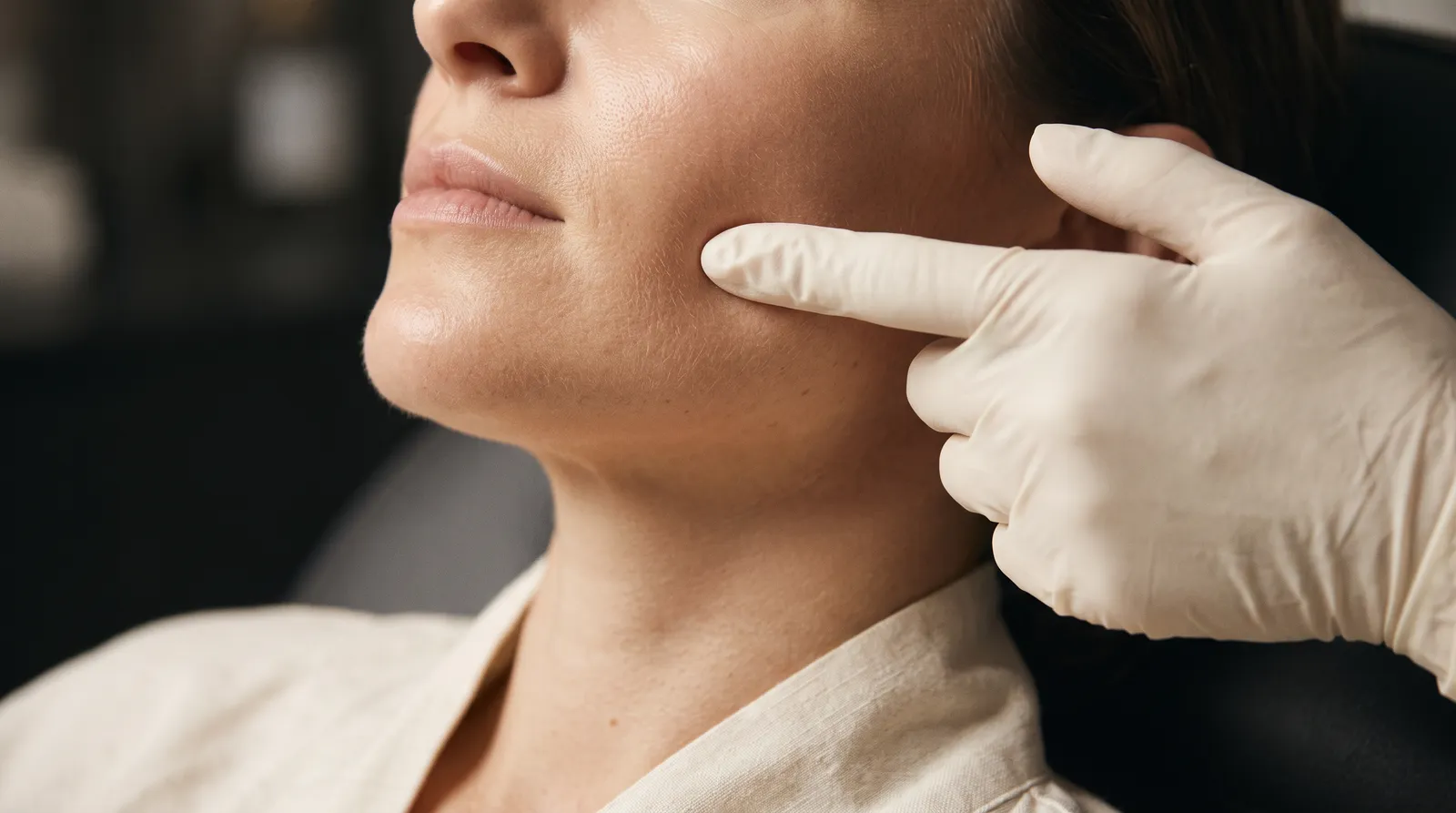
Most injectable consultations still begin and end with a conversation about lines and volume. A patient points to a nasolabial fold or a glabellar crease, the injector assesses static and dynamic rhytids, and a treatment plan follows. This framework is not wrong, but it is incomplete. It leaves out an entire domain of aging and photodamage that patients notice, even when they cannot name it: skin quality.
Skin quality, comprising texture, tone, elasticity, and barrier function, is now recognized in the aesthetic literature as a distinct clinical assessment domain, separate from volume loss and dynamic wrinkling. Treating volume and movement while ignoring skin quality can leave patients feeling that "something is still off," even after a technically excellent filler or neuromodulator treatment. For injectors and trainees, building skin quality assessment into every consultation is both good clinical practice and a differentiator in patient outcomes.
What "Skin Quality" Actually Means
Unlike wrinkle severity or volume loss, which are relatively easy to grade on standardized scales, skin quality has historically lacked a single agreed-upon definition. A 2021 consensus effort published in Clinical, Cosmetic and Investigational Dermatology worked to formalize this, describing skin quality through visual, topographical, and mechanical attributes: things like surface evenness, tone evenness, firmness, and glow. A related global advisory panel converged on four core evaluable parameters, often summarized as firmness, surface evenness, tone evenness, and glow, along with associated features such as radiance and the appearance of pores.
Validated instruments have followed this consensus work. The Skin Quality Assessment Scale, developed by an international group of experts, evaluates six parameters: hydration, elasticity, redness, pigmentation, sebum activity, and texture. Whether or not a practice adopts a formal scale, the underlying point matters clinically: skin quality is measurable, gradable, and trackable over time, not a vague aesthetic impression.
This matters for consultations because volume and rhytid assessment alone will systematically miss a category of patient concern. A patient with well-preserved midface volume can still present with dull tone, uneven pigmentation, coarse texture, and reduced elasticity, features that are often the actual source of a tired or aged appearance in early-to-mid aging patients, particularly those in their 30s and 40s who are not yet significant candidates for volumizing filler.
The Biology: Two Distinct Aging Processes
Understanding why skin quality requires its own assessment lane starts with basic cutaneous biology. Skin aging results from two biologically distinct processes: intrinsic (chronologic) aging and extrinsic aging, of which photoaging is the dominant driver.
Intrinsic aging is a slow, genetically programmed process. In the dermis, it is characterized by three features: gradual atrophy from collagen loss, degeneration of the elastic fiber network, and reduced hydration. Collagen bundles become loose, thin, and disorganized compared to sun-protected skin of the same chronologic age, and the epidermis thins with a flattened dermal-epidermal junction.
Photoaging, by contrast, is driven by cumulative ultraviolet exposure and produces a different histologic picture. Its hallmark is solar elastosis, a massive accumulation of degraded, disorganized elastotic material in the upper and mid-dermis, along with collagen fragmentation and irregular epidermal thickening. Clinically, this is what produces the coarse texture, mottled pigmentation, telangiectasias, and leathery quality seen in significantly sun-damaged skin, features that are mechanistically distinct from the volume loss addressed by filler.
The epidermal barrier sits at the center of both processes. An intact barrier limits transepidermal water loss and protects against environmental insult; when it is compromised (by aging, UV damage, harsh actives, or over-treatment), the result is dehydration, increased sensitivity, and a rough, dull surface texture, independent of what is happening structurally in the dermis. This is precisely why barrier support is foundational to skin quality management, and why it deserves consultation time separate from the volume conversation.
Why This Belongs in Every Injectable Consult
A consultation built solely around wrinkle severity and volume deficits misses the mechanistic reality that patients are usually dealing with both problems simultaneously: structural loss (fillable) and surface/textural change (not fillable). Addressing only the former with excellent technique can still leave a patient looking tired if tone, texture, and radiance are untouched.
There is also a sequencing and expectation-setting reason to assess skin quality upfront. Barrier status affects how skin tolerates needles, energy-based devices, and topical actives. A consensus guideline from a panel of Australian dermatologists and a plastic surgeon on periprocedural skincare distinguishes between barrier non-disruptive procedures (neuromodulators, fillers, threads, polynucleotides) and barrier-disruptive procedures (resurfacing, certain energy-based and non-energy surface-active treatments). Knowing baseline barrier integrity helps the injector anticipate healing time, bruising risk, and how aggressively topical actives can be layered around a procedure.
Practically, a skin quality assessment should be a standard, brief part of intake: evaluate texture (smoothness, roughness, scarring), tone (evenness, dyspigmentation, erythema), elasticity/firmness, and barrier status (dryness, sensitivity, transepidermal water loss cues) alongside the standard volume and dynamic wrinkle exam. This does not need to be a separate visit; it can be a five-minute structured addition to the existing consultation using visual grading, palpation, and patient-reported symptoms (stinging, tightness, reactivity).
Foundational Skincare: The Starting Point, Not an Afterthought
Medical-grade skincare is often treated as a retail upsell rather than a clinical intervention, but the periprocedural skincare consensus literature treats it as foundational. Establishing a basic regimen, cleanser, moisturizer, and broad-spectrum SPF 50+, two to four weeks before any procedure is a standard recommendation, with actives such as vitamin A derivatives, vitamin B3 (niacinamide), antioxidants, hyaluronic acid, and lipid-replenishing ingredients layered in based on individual skin condition.
Collagen-stimulating topicals, particularly retinoids, along with adjuncts like bakuchiol and hydroxy acids, have varying levels of supporting evidence for improving texture and tone over time. These are slow-acting interventions measured in months, not weeks, which is exactly why they should be introduced early and consistently rather than as a rushed pre-event prep.
For injectors, the clinical takeaway is that skincare is not separate from injectable planning, it is the substrate the injectable plan sits on top of. A patient with a compromised, reactive, or under-hydrated barrier is a different injection candidate (in terms of bruising risk, swelling, and healing) than one with a well-maintained barrier, even if their volume and wrinkle findings are identical.
Sequencing Combination Treatments
Once skin quality is assessed as its own domain, the natural next question is how to integrate biostimulatory treatments, energy-based devices, and neuromodulators or fillers without one intervention undermining another. Expert consensus and systematic review data offer some general, practical principles.
Neuromodulator and filler, same day. Consensus recommendations for combined aesthetic interventions support that botulinum toxin and filler may generally be performed in the same session, in either order, when both are indicated.
Energy-based devices relative to injectables. When microfocused ultrasound or similar energy-based devices are combined with injectables in the same session, consensus guidance recommends performing the energy-based treatment before injectables, since post-injection tissue changes and product placement can complicate device targeting and settings.
Spacing across sessions. When treatments are not combined on the same day, spacing consecutive interventions roughly one to two weeks apart is a reasonable general principle, allowing side effects (swelling, bruising, erythema) to resolve and allowing the injector to assess results before layering the next modality.
Biostimulators as a distinct category. Collagen-stimulating agents such as poly-L-lactic acid and calcium hydroxylapatite are increasingly combined with toxin, filler, and energy-based devices to address skin firmness and quality rather than acute volume correction. Systematic review data supports that these combinations are generally well tolerated, though the strength of evidence for specific pairings and timing varies and should be weighed against product labeling and individual patient factors.
Barrier status as a gating factor. Regardless of the specific modality sequence, barrier-disruptive procedures (aggressive resurfacing, certain peels or energy treatments targeting the epidermis) generally warrant more caution around timing relative to barrier non-disruptive injectable procedures, and around how quickly active topicals are reintroduced afterward.
The unifying principle across all of this is that sequencing decisions should be individualized, informed by product-specific guidance, and grounded in an honest assessment of what problem each modality is actually solving: volume, dynamic movement, or skin quality. A plan that treats all three as separate but coordinated problems, rather than substituting one for another, produces more coherent, natural-looking outcomes.
Bringing It Together in Practice
For trainees and early-career injectors, the practical shift is small but meaningful: add a structured skin quality check to every consultation, not as an optional add-on but as a standard third pillar alongside volume and dynamic wrinkle assessment. Document texture, tone, elasticity, and barrier status the same way you document fold depth or static rhytids.
From there, treatment planning becomes a matter of matching modality to mechanism: neuromodulators for dynamic movement, fillers for volume, and skincare, biostimulators, or energy-based devices for skin quality, sequenced thoughtfully rather than treated as interchangeable or secondary. Patients are far more likely to be satisfied with an outcome that addresses the full picture of how their skin looks and feels, not just how deep their folds are.
Sources
- Philipp-Dormston WG, et al. "Skin Quality: A Holistic 360 Degree View: Consensus Results." Clinical, Cosmetic and Investigational Dermatology.
- "Defining Skin Quality: Clinical Relevance, Terminology, and Assessment." Clinical, Cosmetic and Investigational Dermatology.
- "Skin measurement devices to assess skin quality: A systematic review on reliability and validity." Skin Research and Technology.
- Poon F, Kang S, Chien AL. "Mechanisms and treatments of photoaging." Photodermatology, Photoimmunology & Photomedicine.
- de Maio M, et al. "Consensus Recommendations for Combined Aesthetic Interventions in the Face Using Botulinum Toxin, Fillers, and Energy-Based Devices." Dermatologic Surgery.
- "A Guide to Periprocedural Skin Care Regimen for Injectable and Nonenergy Cosmetic Procedures Based on a Consensus of 6 Aesthetic Practitioners."
Educational Disclaimer
This article is intended for professional educational purposes for licensed aesthetic providers and students enrolled in relevant training programs. It is not a substitute for hands-on clinical training, procedural certification, individualized patient assessment, or product-specific manufacturer guidance. Always follow current product labeling, institutional protocols, and applicable scope-of-practice regulations when developing a treatment plan for any patient.
Continue reading
More articles.

Clinical Technique
Recognizing and Managing Vascular Occlusion in Dermal Filler Injection
A clinical guide for injectors on recognizing filler-induced vascular occlusion, danger zones, warning signs, and emergency hyaluronidase protocols.
FAI Staff9 min
Clinical Technique
Laser Physics Fundamentals and Chromophore Targeting: A Clinical Primer
Learn selective photothermolysis and chromophore targeting (melanin, hemoglobin, water) to guide laser device selection for aesthetic providers.
FAI Staff9 min
Clinical Technique
Lip Anatomy, Aging, and a Practical Typology Framework for Filler Treatment Planning
A clinical guide to lip anatomy, aging changes, and a practical typology framework for aesthetic injectors planning filler treatments.
FAI Staff8 min
Clinical Technique
HA vs. Non-HA Dermal Fillers: How to Choose the Right Product for the Right Goal
A clinician's guide to choosing HA versus biostimulatory fillers like Radiesse, Sculptra, and Bellafill by goal, area, and reversibility.
FAI Staff9 min